The State of the Union Is Not a Speech. It’s a Brand Campaign.
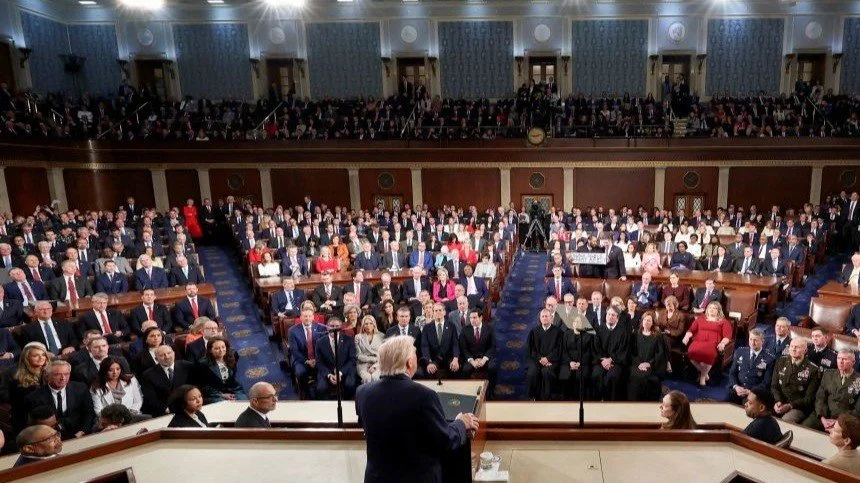
Last night’s State of the Union wasn’t just a constitutional requirement.
It was a live, primetime marketing campaign.
And if you watched it purely as politics, you missed the strategy.
Let’s be clear: the State of the Union exists because Article II, Section 3 of the U.S. Constitution requires the president to report to Congress on the condition of the nation periodically. But what began as a governance update has evolved into something far more powerful.
It is the single-largest annual brand-positioning moment for the Executive Office.
And in a midterm election cycle? It’s a relaunch.
The State of the Union as a Product Launch
In marketing terms, the State of the Union functions like an annual shareholder meeting combined with a product roadmap reveal.
The “product” isn’t a bill.
It’s leadership.
The American public is not just the audience; we are the target market.
The speech is crafted to answer one core consumer question:
Is this administration delivering value?
Every achievement highlighted is a case study. Every statistic is social proof. Every invited guest in the balcony is a testimonial.
That is not accidental. That is brand strategy.
Before midterm elections, this speech becomes even more deliberate. It is less about governance updates and more about:
Brand positioning
Trust reinforcement
Narrative control
Market segmentation
It’s a commercial. A long one. But a commercial nonetheless.
Selling the Executive Brand
An incumbent administration uses the State of the Union to reinforce three pillars:
1. Proof of Performance (The Case Studies)
Job growth. Infrastructure. Inflation moderation. Border numbers. Manufacturing investment. Tax credits.
These are framed like quarterly wins in a boardroom presentation.
“Here’s what we said we’d do.” “Here’s what we delivered.” “Here’s why we deserve renewal.”
It’s retention marketing.
2. Target Market Segmentation
Watch closely, and you’ll see the segmentation strategy unfold in real time.
Suburban families. Small business owners. Union workers. Seniors. Young voters. Veterans.
Each story is intentionally selected to humanize policy. Not to inform... to connect.
Great marketers know: people don’t remember policy language. They remember stories.
The State of the Union uses storytelling to move the speech from macro data to micro emotion.
3. Reframing the Narrative
If there are weaknesses in the administration’s brand, such as high inflation, immigration concerns, or global instability, the State of the Union attempts to reposition those narratives.
Not by ignoring them.
But by reframing them.
That’s classic brand pivot strategy.
You don’t let your competitor define you. You redefine yourself.
The Rebuttal: Competitive Counter-Marketing
Then comes the rebuttal.
And this is where it gets interesting.
The opposing party’s response is not just disagreement.
It is a competing brand campaign.
If the State of the Union is the premium commercial, the rebuttal is the comparative ad.
Its job is to create buyer doubt.
“Is what you heard aligned with your lived experience?” “Do the numbers match your grocery bill?” “Does that ‘economic growth’ feel real to you?”
This is negative marketing, but strategically so.
The opposition speaks directly to the skeptical market... the voters who feel economic strain, regulatory pressure, or cultural disconnect.
They aim to reposition themselves as the value alternative.
Same country. Different brand promise.
Why This Matters Before Midterms
Midterm elections are referendums on brand performance.
Voters are not choosing a president; they are choosing whether to renew the administration’s operating margin in Congress.
Which means the State of the Union is not about applause in the chamber.
It’s about persuasion in living rooms.
It is designed to:
Re-energize the base
Reassure wavering moderates
Neutralize key attacks
Set the campaign narrative for the next 6–9 months
In marketing terms, this is pipeline generation for November.
The Question We Should All Be Asking
Strip away party lines. Remove the personalities. Ignore the pundits.
The only question that matters, the one the entire speech is engineered around, is this:
Is the president working for you?
Not for donors. Not for party leadership. Not for media cycles.
For you.
Your job security. Your cost of living. Your safety. Your children’s future.
If you view the State of the Union through that lens, it becomes less about applause and more about accountability.
My Take as a Marketer
Political marketing fascinates me because it is the purest form of brand trust.
No packaging. No retail shelf. No influencer campaign.
Just a leader standing in front of the nation, asking for continued belief.
The State of the Union is the most high-stakes annual brand audit in America.
And the American public? We are the board.
As we head toward midterms, don’t just ask whether you liked the speech.
Ask whether it delivered clarity, credibility, and conviction.
Because in the end, every election is a purchase decision.
And the consumer, for once, holds all the power.