🎬 Netflix, WBD, and the Billion-Dollar Bidding War That Will Rewrite the Future of Entertainment
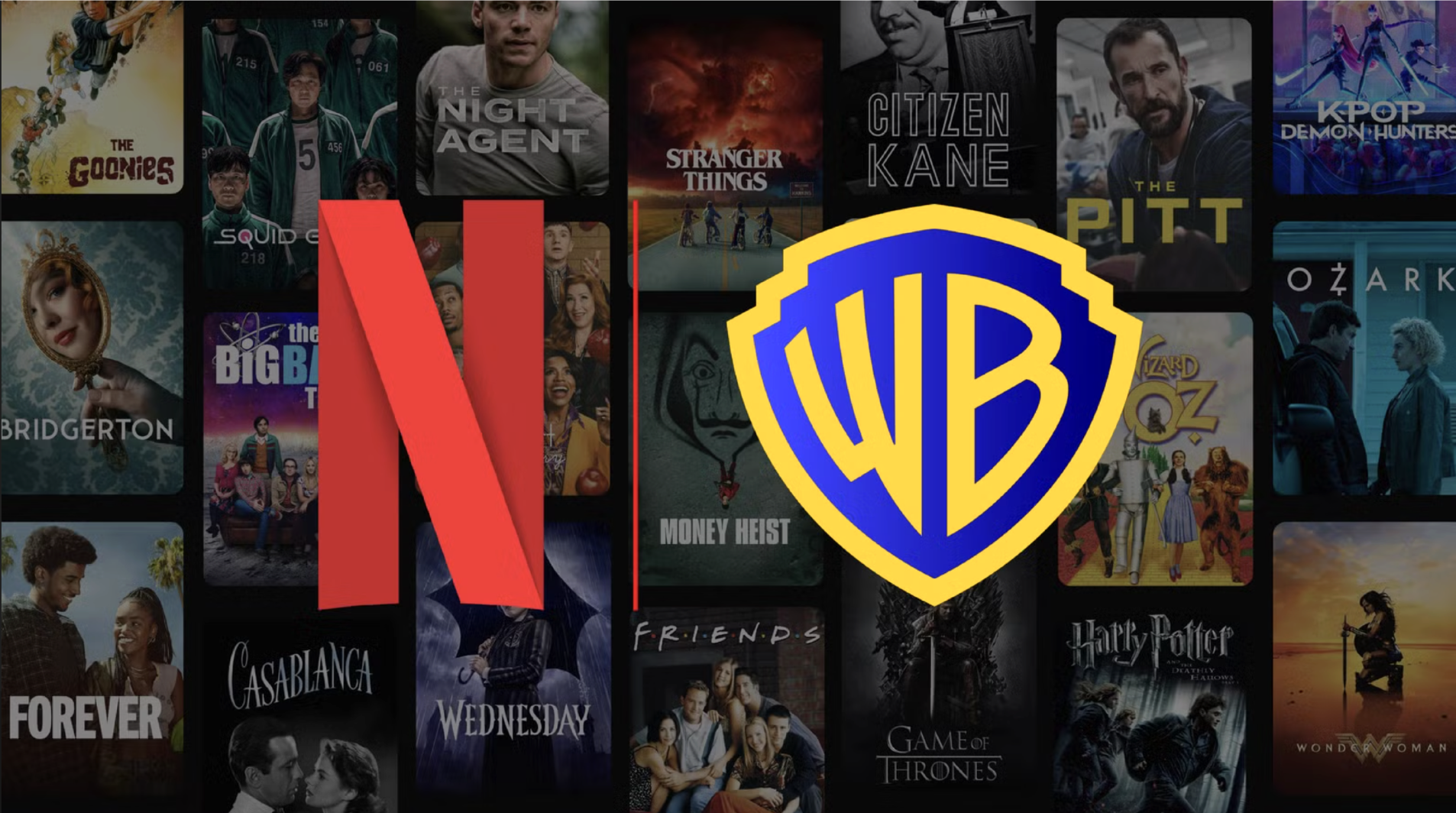
Why Marketers Should Be Paying Attention to the Biggest Power Grab Hollywood Has Seen in a Decade
Let’s stop pretending the streaming wars were ever about “content.” This Netflix–Warner Bros. Discovery saga is about something far bigger:
The right to control culture.
And make no mistake, Netflix’s planned $82.7 billion acquisition of WBD isn’t just a business move. It’s a land grab for global influence, consumer behavior, and the future of entertainment economics at scale.
Paramount’s hostile counter-bid? That’s not desperation. That’s survival instinct.
We’re not watching a merger. We’re watching the entertainment industry’s tectonic plates shift in real time, and marketers should be paying very close attention.
Netflix Wants Monopoly-Level Mindshare — and It’s Not Being Subtle About It
If Netflix locks down WBD, here’s what it really owns:
Iconic franchises (Harry Potter, DC Universe, Game of Thrones)
HBO’s prestige storytelling brand
A century of Warner Bros. brand equity
A global theatrical distribution pipeline
Decades of multi-generational audience loyalty
Netflix isn’t buying a studio— it’s absorbing the last major library standing between it and cultural dominance.
This is not about streaming supremacy. This is about becoming the default entertainment identity for billions of people worldwide.
From a marketing perspective, this is brilliance bordering on ruthless:
1️⃣ When You Own the Stories, You Own the Consumer
The real marketing brilliance isn’t in the content itself — it’s in the control of the discovery journey.
If Netflix controls the world's most beloved franchises:
They control attention.
They control viewing behavior.
They control pricing psychology.
They control what becomes culturally relevant.
And when a brand controls all four, it stops competing. It dictates.
MARKETING PERSPECTIVE:
This is Apple-level ecosystem thinking. Netflix wants to be the entertainment UI of the world — the home screen of culture.
2️⃣ Bundling, Pricing, and Audience Conditioning
Let’s talk money — because this deal changes everything.
Netflix’s acquisition would revive the cable-era playbook:
Tiered bundles
Premium add-ons
Exclusive franchise windows
Event-based streaming drops
MARKETING PERSPECTIVE:
This is subscription psychology 101. When you centralize emotional IP under one roof, you can raise prices repeatedly, and customers justify it as “value.”
Netflix isn’t building a platform. They’re building a habit, a lifestyle, a default choice.
And habits are the strongest form of brand loyalty.
Consumers will complain, then pay anyway.
3️⃣ The Creative Economy Just Became a Buyer’s Market
With fewer major buyers, Netflix gains leverage over talent, creators, and studios. That means lower acquisition costs, fewer risks, and tighter creative control.
Translation: Netflix gets bigger. Everyone else gets smaller.
Netflix House: When Streaming Becomes a Lifestyle Brand
While everyone was debating subscriber counts, Netflix was quietly building physical infrastructure for something far more potent: A cultural theme park.
Netflix House is not a retail experiment. That’s experiential funnel strategy.
Stranger Things play zones
Bridgerton dining
Buyable merchandise ecosystems
TikTok-ready installations
This turns viewers into participants, and participants into brand evangelists. It's how you future-proof a brand: You make it tangible, Instagrammable, and inescapable.
MARKETING PERSPECTIVE:
Netflix House is permanent outbound marketing. Every visitor becomes content. Every photo becomes earned media. Every experience reinforces IP devotion.
This is how you turn a streaming service into a lifestyle brand.
Paramount Isn’t Competing — It’s Fighting for Its Life
Paramount’s $30 per share hostile bid tells us everything:
“Netflix cannot be allowed to swallow the industry whole.”
They know a Netflix–WBD mega-brand would erase them within 24 months. If Netflix wins WBD, Paramount becomes Blockbuster 2.0. Their bid isn’t ambition—it’s oxygen.
But beyond survival, Paramount’s strategy creates real marketing implications:
1️⃣ It Weaponizes Regulatory Pressure
Political pressure + antitrust scrutiny + consolidation fear = a nightmare for Netflix. It introduces uncertainty that weakens consumer and investor confidence.
2️⃣ It Forces a Conversation About Brand Identity
Paramount attempting to absorb WBD creates a muddier, less defined identity than Netflix’s ultra-clean consolidation.
3️⃣ It Signals a Return to Conglomerate Branding
But unlike Netflix, Paramount doesn’t have a global marketing engine strong enough to make a merger feel seamless.
A Paramount–WBD brand is defensive. A Netflix–WBD brand is dominant.
Would a Paramount + WBD Merger Even Work?
Would Paramount Maximize WBD’s Value? No.**
Paramount merging with WBD would stabilize the market. But marketing-wise? It’s not transformational.
Paramount’s brand portfolio lacks global pull.
Their streaming UX is weak.
Their content discovery engine isn't built for modern attention cycles.
MARKETING PERSPECTIVE:
Paramount can preserve competition. But Netflix can elevate the brand equity of WBD’s franchises globally — instantly.
A Paramount-WBD merger is a defensive play. A Netflix-WBD merger is an offensive domination strategy.
One is safe. One is seismic.
So What’s the Best Option? It Depends on the Future You Believe In.
**👉 If you believe in preserving industry competition…
Paramount is the safer choice.**
It slows consolidation. It keeps Hollywood’s ecosystem alive. It prevents a single platform from owning half of global streaming culture.
**👉 If you believe in innovation through scale…
Netflix is inevitable.**
A Netflix-WBD empire could accelerate:
global theatrical distribution
interactive storytelling
shoppable content
AI-powered creative development
worldwide experiential branding
It would also crush smaller competitors, reset pricing norms, and potentially lead to long-term consumer dissatisfaction.
Both outcomes reshape the industry. But only one fundamentally rewrites how audiences engage with content.
The Real Story: Streaming Is No Longer a Technology Business. It’s a Power Business.
This isn’t about who makes the best shows. It’s about who controls the pipelines of culture.
Brand loyalty. Global IP ownership. Physical retail extensions. Vertical integration. AI-powered audience modeling.
Netflix is positioning itself not as a streamer but as a cultural sovereign.
And WBD is the final frontier standing between it and a decade of uncontested dominance.
Final Take: The Future of Entertainment Isn’t Streaming. It’s Consolidation.
Paramount’s bid isn’t the end of the story— it’s the opening shot of a war for the cultural operating system of the next 20 years.
Marketers, pay attention:
The platform that wins this battle will control the narratives that shape global culture.
Experience will matter as much as content.
IP will be the new currency of influence.
Experiential branding will separate winners from extinct brands.
Netflix isn’t trying to win the streaming wars. Netflix is trying to end them.
And whether Paramount saves WBD or Netflix absorbs it, one truth is becoming impossible to ignore:
The entertainment industry, as we know it, is over. A new hierarchy is coming. And the brands that understand the power of narrative—at scale—will own the future.